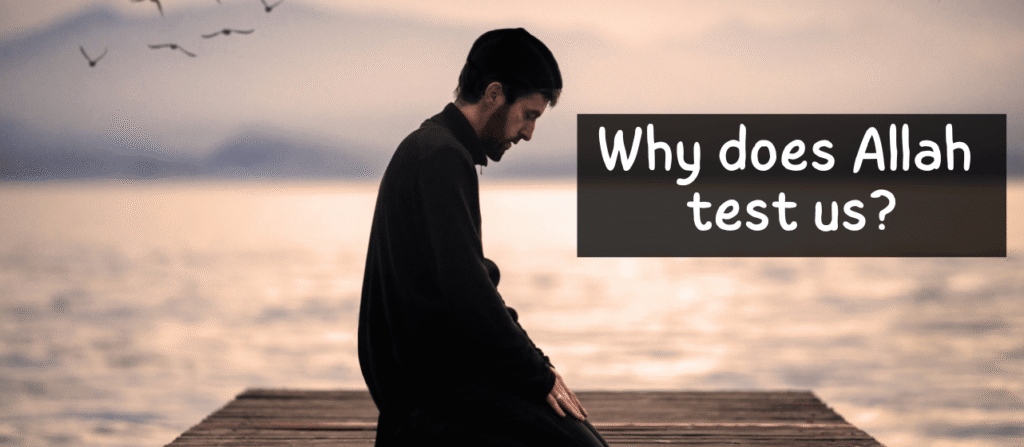
Life is filled with ups and downs. As Muslims, we often ask: Why does Allah test us? Are hardships a punishment? Or are they a sign of something deeper?
For readers of www.quraninsider.com, this guide explores the Islamic perspective on trials and tribulations, supported by authentic Qur’anic verses and Hadith, while offering practical spiritual guidance for believers worldwide.
The Purpose of Tests in Islam
Allah clearly explains the purpose of life in the Qur’an:
“He is the One Who created death and life to test which of you is best in deeds.” (Qur’an 67:2)
This verse teaches a powerful truth: life itself is a test. Success and hardship, wealth and poverty, health and illness — all are part of Allah’s divine plan to examine our faith, sincerity, and character.
Unlike some beliefs that claim suffering is always punishment, Islam clarifies that there is no direct link between worldly hardship and Allah’s anger. Losing a job does not mean Allah is displeased. Receiving a promotion does not automatically mean He is pleased. Both situations are tests — just different types.
Allah observes how we react:
- Do we remain grateful in ease?
- Do we stay patient in hardship?
- Do we obey Him consistently or only when life is comfortable?
Trials: A Means of Elevation and Mercy
The Prophet ﷺ said:
“Nothing befalls a believer, even if it were the prick of a thorn, except that Allah raises his rank or removes a sin because of it.” – Sahih al-Bukhari
This Hadith highlights two major reasons for trials:
1. Raising Your Status in Paradise
When a believer faces hardship with patience and trust in Allah, their spiritual rank increases. Every tear, every moment of endurance, and every sincere dua is rewarded.
A temporary difficulty may result in eternal elevation in Jannah.
2. Purification from Sins
Sometimes trials serve as a form of mercy. Instead of facing punishment in the Hereafter, Allah allows a believer to experience a manageable difficulty in this life that wipes away sins.
What may seem painful in the moment could actually be Allah’s compassion saving us from something far worse in the next life.
How Should Muslims Respond to Tests?
Understanding why Allah tests us is only half the answer. The real question is: How should we react?
1. Keep Hardship in Perspective
Allah reassures us:
“Allah does not burden a soul beyond what it can bear.” (Qur’an 2:286)
This foundational Islamic principle gives immense comfort. No matter how heavy a situation feels, it is within your capacity to endure.
Often during trials, we focus only on what we lost:
- A job
- A relationship
- Financial stability
But we forget what remains:
- Our health
- Our family
- Our iman (faith)
Gratitude shifts perspective. Remembering Allah’s promise prevents despair and strengthens emotional resilience in Islam.
2. Trust That Allah Knows What We Don’t
Allah says:
“Perhaps you dislike something which is good for you and love something which is bad for you. Allah knows, and you do not know.” (Qur’an 2:216)
Human vision is limited. We see only the present moment. Allah sees the past, present, and future.
For example, a missed opportunity or delay may protect us from unseen harm. What feels like rejection could be divine protection.
Just as parents restrict a child’s unhealthy habits out of love, Allah’s wisdom operates beyond our immediate understanding. Trusting His plan is part of true tawakkul (reliance upon Allah).
3. Combine Patience (Sabr) and Gratitude (Shukr)
The Messenger of Allah ﷺ beautifully summarized the believer’s mindset:
“Amazing is the affair of the believer… If something good happens, he is grateful and that is good for him. If something harmful happens, he is patient and that is good for him.” – Sahih Muslim
This Hadith reveals a powerful Islamic mindset:
- In ease → show gratitude.
- In hardship → practice patience.
- In both cases → gain reward.
Few people maintain balance in both situations. But the believer benefits in every scenario because their heart remains connected to Allah.
Gratitude increases blessings, as mentioned in Surah Ibrahim (14:7). Patience transforms pain into spiritual strength.
4. Ease Always Follows Hardship
Allah promises twice in Surah Ash-Sharh:
“Indeed, with hardship comes ease. Indeed, with hardship comes ease.” (Qur’an 94:5–6)
Islamic scholars explain that while hardship is mentioned once, ease is mentioned twice — indicating that relief and reward outweigh the difficulty.
History provides powerful examples. The early Muslims endured years of persecution in Makkah. Yet within a decade after migration, Islam spread throughout Arabia, and thousands embraced the faith.
Temporary struggle led to lasting victory.
This teaches us a crucial lesson: The reward of patience is always greater than the pain of the test.
Final Reflection: Tests Are Signs of Allah’s Care
When facing trials, Shaytan may whisper that Allah has abandoned you. But Islamic teachings show the opposite.
Trials:
- Strengthen faith
- Purify the heart
- Elevate status
- Increase reliance on Allah
They are not signs of abandonment — they are signs of divine attention.
As believers, our goal is not to avoid all hardship, but to respond with the right attitude. With sabr, shukr, and tawakkul, every test becomes a means of drawing closer to Allah.
May Allah protect us from severe trials, and if we are tested, may He grant us patience, gratitude, and unwavering faith. Ameen.